Dubai – September 21, 2026 – CBRE Middle East, the global leader in commercial real estate services, has released its latest research paper on the Ras Al Khaimah (RAK) real estate market for the first half of 2026.
The emirate remains on its growth trajectory, supported by continued investor demand, a growing pipeline of major real estate developments and sustained market interest across investors, developers and visitors alike. While regional geopolitical tensions have weighed on broader economic activity across the Gulf, Ras Al Khaimah has continued to attract capital, new businesses and significant development-related investments, reaffirming confidence in its long-term growth story.
The UAE’s economic outlook has softened during 2026, with GDP now forecast to contract by around 1.5% this year amidst ongoing disruptions to trade, tourism and broader economic activity linked to the regional conflict.
The UAE economy continues to be supported by strong domestic demand, growing trade activity and ongoing efforts to attract investment and stimulate business growth. These trends were reflected in economic indicators during the first half of 2026, with non-oil trade reaching AED 1.93 trillion, up 13.1% year-on-year. Business activity also remained robust, as evidenced by the Purchasing Managers’ Index (PMI), which rose to 55.3 in August, signaling continued expansion across the non-oil economy.
Within this environment, Ras Al Khaimah has maintained solid economic fundamentals, supported by continued business formation, growing investment activity and the advancement of major projects, including the USD 5.1 billion Wynn Al Marjan Island integrated resort, which is now expected to open in September 2027. During H1 2026, the RAK Chamber of Commerce & Industry reported AED 771.5 million in new investment capital across 967 newly registered establishments, attracting 1,399 investors from 68 nationalities and supporting the creation of 2,449 expected jobs.
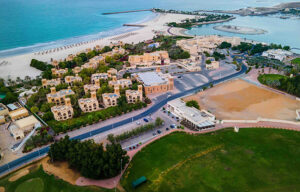
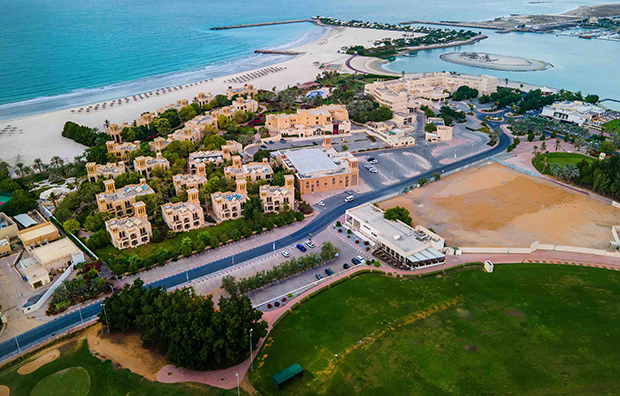
The Residential Market remains one of the emirate’s strongest-performing sectors during H1 2026, with apartment sales values increasing by around 18.0% year-on-year to AED 2,298 per sq. ft., while villa sales rose by 7.3% over the same period. Whilst both pricing and absorption levels have moderated in the period since the end of February, the year-on-year performance remains very positive. Growth continued to be led by the emirate’s established waterfront communities, with apartment values on Al Marjan Island rising by 23.1% year-on-year and values in Al Hamra increasing by 14.7%.
The ready market also saw healthy price growth, with apartment and villa values increasing by 11% and 10% respectively compared with the same period last year.
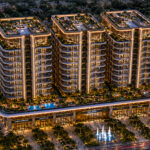
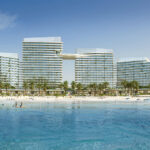
The first half of the year was marked by a series of record-breaking luxury transactions that underlined growing appetite for premium and branded residences within the emirate. The Sky Palace at Waldorf Astoria Residences sold for USD 35.4 million, becoming the highest-value residential transaction in Ras Al Khaimah’s history. Additional landmark deals included a USD 15 million penthouse sale within the same project and a USD 34.7 million Sky Mansion transaction at Mondrian Al Marjan Island Beach Residences. Rental performance also remained strong, with apartment rents increasing by 14.3% year-on-year, led by growth in Mina Al Arab and Al Marjan Island.
Looking ahead, the residential market is preparing for a significant expansion in supply, with more than 34,000 units expected to be delivered between 2026 and 2030. Around 10,000 of these units are expected to be branded residences, highlighting the growing appetite among developers to bring internationally recognized luxury brands to the emirate. Major project announcements during the period included The Strand and Lunara by RAK Properties, the AED 25 billion Evermore masterplan by Beyond Developments, and the launch of Karl Lagerfeld Beach Residences on Al Marjan Island.
The Tourism Sector saw diverging trends during the first half of 2026, as record visitor numbers were offset by softer hotel operating performance. The emirate welcomed a record 670,400 hotel visitors during the period, representing an increase of 2.7% year-on-year, largely driven by a significant uplift in domestic and GCC visitation. Domestic visitor numbers increased by 47% year-on-year, while arrivals from GCC markets also rose by 47%, highlighting the growing importance of regional demand.
Hotel operators faced softer trading conditions compared with last year, with occupancy averaging 49% during the first half, while Revenue per Available Room (RevPAR) declined by 28.6% year-on-year to AED 348 per room per night. Despite this, hotels continued to demonstrate pricing strength, with Average Daily Rates (ADR) increasing by 5.2% year-on-year to AED 705.6 per room per night. The sector generated more than AED 606 million in total revenues during the first six months of the year, including AED 385 million in room revenues and AED 192 million from food and beverage operations.
The emirate’s long-term tourism outlook continues to be supported by a substantial pipeline of hospitality and infrastructure projects. Ras Al Khaimah currently has approximately 9,000 operational hotel keys across 60 hotels, with a further 8,500 keys planned between 2027 and 2030. More than 80% of future supply is positioned within the five-star category, while nearly two-thirds will be located on Al Marjan Island. Alongside hotel development, investment continues in transport and tourism infrastructure, including expansions at Ras Al Khaimah International Airport, enhanced mobility networks across the emirate and the upcoming opening of the Wynn Al Marjan Island resort.
Matthew Green, Head of Research at CBRE MENA, comments: “The pace of change we are witnessing in Ras Al Khaimah continues to impress. Despite a more challenging regional backdrop, investor interest in the emirate remains evident, supported by a growing pipeline of high-profile development and infrastructure projects. While we are beginning to see a moderation in some performance indicators including absorption levels and sales pricing following an exceptional period of growth, overall activity levels remain positive. With major hospitality, residential and tourism projects continuing to progress, Ras Al Khaimah is well positioned to strengthen its role as one of the UAE’s most compelling investment and lifestyle destinations in the coming years.”