As Dubai’s real estate market matures, the owners who outperform are not always the ones who bought better. They are often the ones who operate smarter.
Dubai Land Department reported AED 252 billion in transactions in Q1 2026, a 31% increase. As the market grows, landlords and property managers are paying closer attention to what happens after an asset is bought, leased and occupied.
For years, maintenance followed a familiar pattern: something breaks, a technician is called, the fault is fixed and the invoice is closed. It may look cost-effective, but it often creates a hidden cycle of repeated complaints, emergency call-outs, tenant dissatisfaction and avoidable asset damage.
Dubai’s Law No. (3) of 2026 on building quality and safety reinforces the same direction: owners are expected to take maintenance, assessments, technical reporting and asset condition more seriously. Waiting for breakdowns is becoming a weaker model.
The Hidden Cost of Reactive Maintenance
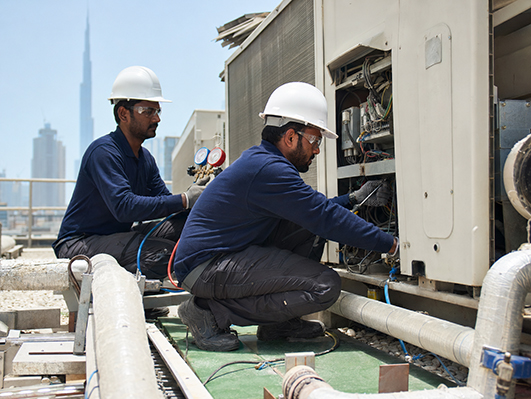
Reactive maintenance rarely starts with a major failure. It starts with an AC unit that takes longer to cool, a drainage line that blocks repeatedly, a DB panel that trips occasionally, or a water stain that keeps returning. Each issue may look manageable in isolation. Together, they point to a property that is degrading faster than it should.
Dubai’s operating conditions make this risk sharper. High summer temperatures, dust, humidity, heavy AC usage and continuous occupancy place pressure on HVAC, electrical, plumbing and drainage systems. A poorly maintained AC system can lead to cooling complaints, leakage, mould risk, compressor failure and emergency costs.
The problem with reactive maintenance is simple: it focuses on the invoice visible today while ignoring the larger cost building quietly in the background.
Maintenance Has Become a Leasing Variable
Tenants in Dubai are more informed and less tolerant of repeated facility issues than they were a decade ago. Whether the asset is a villa, apartment, office, retail unit or serviced residence, occupants expect reliable cooling, stable water pressure, safe electrical systems and fast issue resolution.
That makes maintenance a leasing variable. A well-maintained property is easier to show, retain and defend during renewal discussions. A poorly maintained property creates complaints, negative perception and pressure during rental negotiations.
Why Structured AMC Planning Matters
Annual Maintenance Contracts are becoming more important because they bring structure to property maintenance. A proper AMC should define the asset inventory, inspection frequency, service scope, response expectations, exclusions and reporting method.
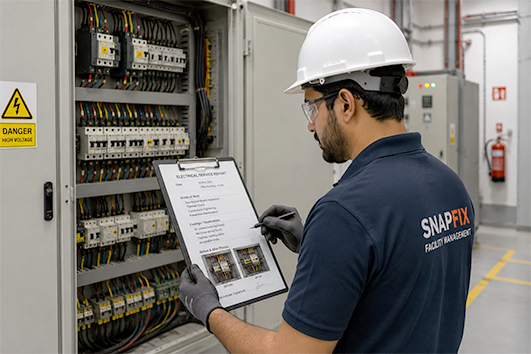
The value is not only in fixing what is broken. The value is in identifying what is likely to fail next. Preventive HVAC servicing can detect blocked filters, dirty coils, weak capacitors, refrigerant issues, blocked drain lines and early compressor stress. Electrical and plumbing checks can reveal overheating points, pressure issues, hidden leakage and drainage restrictions before they become visible failures.
When problems are found early, owners have options. When ignored, owners usually inherit emergency costs.
Evidence-Based Reporting Is No Longer Optional
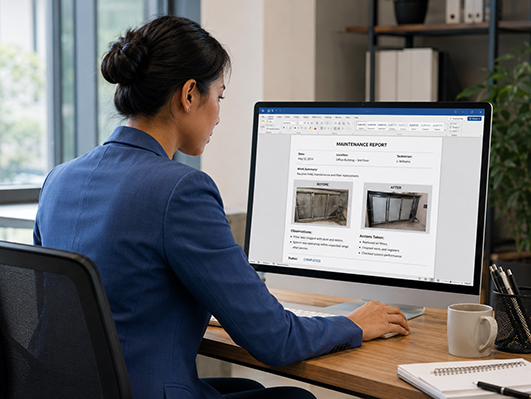
Property owners and managers increasingly want proof, not vague service notes. A report that simply says “job completed” does not help an owner understand asset condition, recurring risk or future cost exposure.
Photo-verified reports, timestamped records, before-and-after images and technician observations create a more useful maintenance record. If the same AC unit fails repeatedly, the real question is whether the unit is ageing, incorrectly sized, poorly installed, badly maintained or nearing replacement.
Without reporting, maintenance becomes disconnected complaints. With reporting, it becomes asset intelligence.
From Repair Vendor to Maintenance Partner
The traditional vendor model is becoming less suitable for owners who want control over asset condition. A vendor fixes the fault in front of them. A maintenance partner tracks the pattern behind the fault, documents the condition and advises what it means for the property’s future.
For example, SnapFixNow™ FMC supports Dubai property owners and operators with HVAC, MEP, AMC, building maintenance and facility support through a structured maintenance approach. The focus is on helping owners move from reactive repair handling toward planned maintenance, clearer reporting and better operational control.
When selecting an AMC provider, price should not be the only filter. Owners should look for genuine HVAC and MEP depth, a defined asset list, documented response expectations, photo-supported reporting and root-cause analysis for recurring faults. For landlords reviewing maintenance contracts, these criteria are a practical first step before renewal.
The New Asset-Protection Mindset
Dubai’s real estate market is becoming more analytical. Investors and professional managers are paying closer attention to operating costs, tenant retention, service quality, compliance readiness, maintenance history and lifecycle performance, not just purchase price and gross yield.
In Dubai’s next phase of real estate maturity, the stronger asset will not only be the one in the better location. It will be the one that is better operated.

Author Bio: Abdullah Showaib represents SnapFixNow™ FMC, a Dubai-based facility maintenance company focused on HVAC, MEP, AMC and building maintenance support for property owners, landlords and real estate operators.